
Introduction
In the vibrant world of Indian cuisine, no meal is complete without a burst of tang and spice. Chutneys and pickles are the unsung heroes of the dining table, offering a balance to the richness of curries and the mildness of breads. They pack a flavorful punch in a small jar and have been cherished for generations as both a condiment and a digestive aid.
The Role of Chutneys and Pickles
Chutneys and pickles add a dynamic layer of flavor to Indian dishes by providing a contrast—often a mix of tangy, spicy, and sometimes sweet notes. They can transform a simple meal into an exciting culinary experience, awakening the palate with every bite.
Chutneys: Fresh, Zesty, and Versatile
Chutneys come in many forms and can be made from a variety of ingredients:
- Mint Chutney: A refreshing blend of mint, cilantro, green chilies, and a squeeze of lemon juice. Perfect for pairing with grilled meats or fried snacks.
- Tamarind Chutney: Known for its sweet and sour profile, this chutney complements spicy dishes and is a favorite for drizzling over street foods like chaat.
- Coriander Chutney: A vibrant green sauce that pairs well with everything from samosas to tandoori dishes, offering a burst of herbaceous flavor.
Pickles: The Art of Preservation
Indian pickles (achar) are a time-honored tradition, utilizing the natural process of fermentation to preserve seasonal produce.
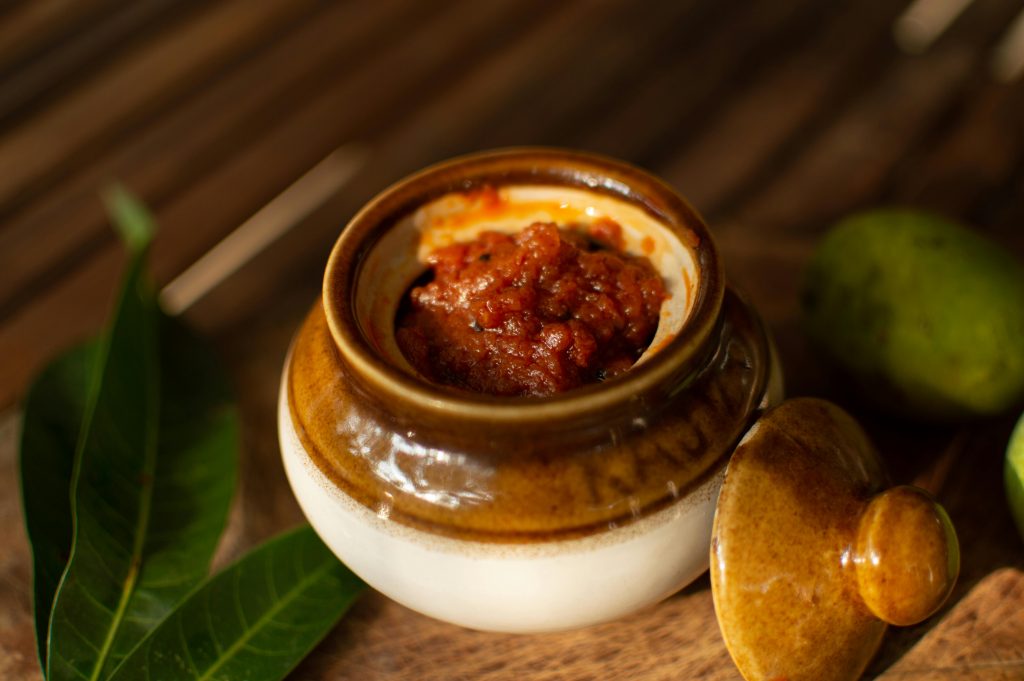
- Mango Pickle: One of the most popular pickles, it combines raw mangoes with mustard oil, a medley of spices, and sometimes vinegar to create a robust, tangy delight.
- Lime Pickle: Bursting with citrus flavor and a spicy kick, lime pickle is an ideal companion to bland staples like rice or roti.
- Mixed Vegetable Pickle: A blend of various vegetables, this pickle offers a complex taste profile and is a testament to the ingenuity of home cooks.
The Science and Art Behind the Flavors
Creating the perfect chutney or pickle is a delicate balance between art and science.
- Fermentation: Pickles undergo fermentation, a process that not only preserves the food but also develops a rich, complex flavor profile over time.
- Acidity and Spice: The key to a great condiment lies in balancing acidity (from lemon juice or vinegar) with spices (like mustard seeds, fenugreek, or red chili).
- Texture Matters: Some recipes call for a smooth consistency, while others celebrate a chunky texture that adds depth to the dish.
Practical Tips for Making at Home
If you’re inspired to try your hand at homemade chutneys and pickles, consider these tips:
- Fresh Ingredients: Use the freshest produce available. The quality of fruits and vegetables directly influences the final flavor.
- Sterilization: Ensure all jars and utensils are thoroughly sterilized to prevent unwanted bacteria from interfering with the fermentation process.
- Experiment Gradually: Start with small batches and adjust the spice levels and acidity to suit your personal taste.
- Storage: Homemade pickles and chutneys can often be stored for several weeks or even months, allowing the flavors to mature beautifully.
Conclusion
Chutneys and pickles are a vibrant expression of Indian culinary creativity. They encapsulate the art of balancing flavors—transforming simple ingredients into bold, unforgettable condiments. Whether you’re new to Indian cooking or a seasoned enthusiast, making your own chutneys and pickles is a rewarding journey that brings a taste of tradition right into your kitchen.