
Introduction
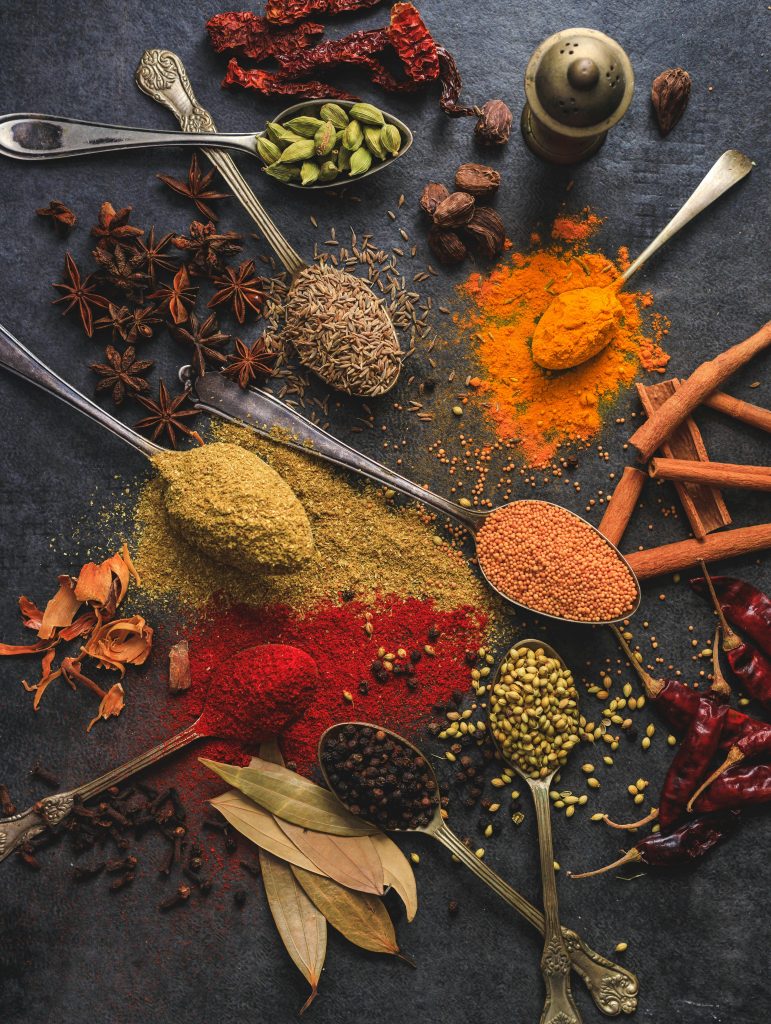
Indian cuisine is renowned for its vibrant flavors and aromatic dishes, and at the heart of this culinary marvel lies a carefully curated selection of spices. In this post, we explore the art and science behind spice blending and how these ingredients create the flavor diversity that makes Indian food so beloved around the world.
The Historical Roots of Indian Spice Blends
Spices have been traded along ancient routes for thousands of years.
- Cultural Exchange: Indian spice blends are a melting pot of indigenous traditions and external influences—from Persian to Arab—each contributing unique notes to the cuisine.
- Traditional Blends: Classic spice mixes such as garam masala, chaat masala, and panch phoron have been refined over generations. Each blend has its own history and regional variations, passed down as a closely guarded family secret.
The Science Behind Spice Blending
Spices do more than just add heat—they create layers of flavor.
- Balancing Act: The secret to a perfect blend lies in balancing bold flavors with subtle undertones. For example, the warmth of cinnamon might be offset by the coolness of cardamom or cloves.
- Flavor Profiles: Each spice has its own profile:
- Cumin offers an earthy base,
- Coriander adds citrusy notes, and
- Turmeric provides both color and a mild, bitter taste.
- Synergy: When combined, these spices interact in complex ways. The timing of when spices are added during cooking—whether at the beginning for a deep infusion or at the end for a burst of aroma—can dramatically alter the final flavor.
Practical Tips for Home Cooks
Unlocking the secrets of spice blending can transform your cooking:
- Experiment with Small Batches: Start by creating small batches of spice mixes. Adjust ratios until you achieve a flavor profile that suits your taste.
- Invest in Quality Spices: Fresh, high-quality spices make a noticeable difference. Purchase whole spices when possible and grind them as needed.
- Layering Flavors: Add spices at different stages of cooking. For example, sauté whole spices at the beginning to release their essential oils, then finish with a pinch of ground spices to elevate the dish.
- Keep a Spice Journal: Record your experiments and adjustments. Over time, you’ll develop your own signature blends.
Conclusion
Spices are the heartbeat of Indian cuisine—they transform simple ingredients into complex, aromatic dishes that tell a story with every bite. Whether you’re a novice cook or a seasoned chef, understanding the art of spice blending opens up a world of flavor possibilities. So, gather your spices, experiment boldly, and let your kitchen become a canvas of vibrant tastes and aromas.